
Table of Contents
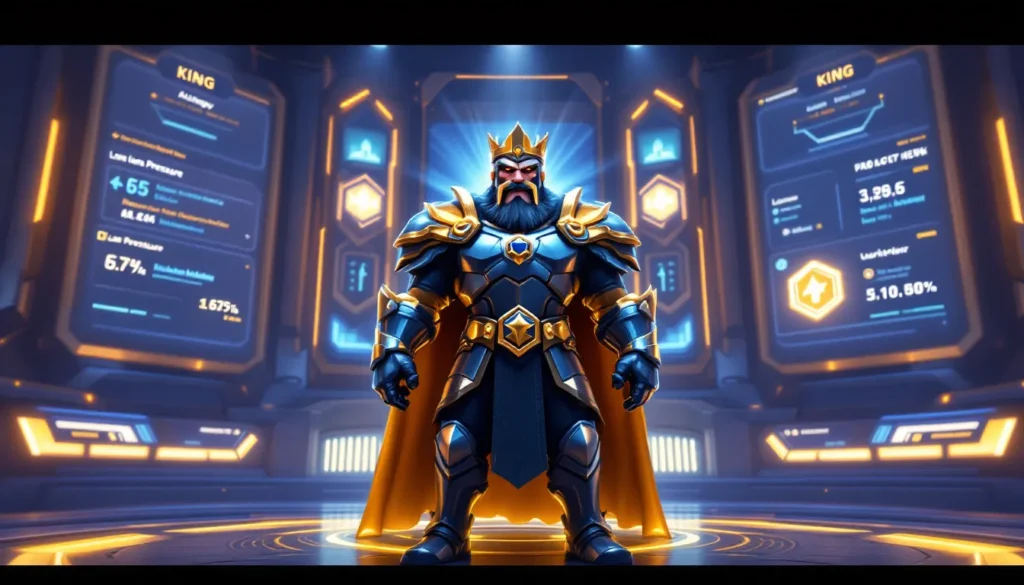
ToggleThe King in Clash Royale isn’t just another card, it’s the trump card that can swing an entire match when deployed with precision. Whether you’re grinding ladder or competing at higher arenas, understanding how to leverage the King from Clash Royale effectively separates the skilled players from the rest. This guide breaks down everything you need to know: from activation mechanics and optimal placement to deck synergies and defensive counters. If you’re serious about climbing ranks and improving your win rate, mastering the King is non-negotiable. Let’s dig into the specifics that’ll transform how you play.
Key Takeaways
- The Clash Royale King gains massive threat potential when activated at the opponent’s tower, increasing damage by 50% and requiring strategic timing and support to maximize effectiveness.
- Mid-ladder King beatdown decks thrive with proper elixir advantage and support cards like Musketeer or Inferno Dragon, but higher ladder play demands control-focused approaches that use the King defensively.
- Inferno Dragon, Valkyrie, and spells like Lightning and Rocket are the most effective counters to the King, while proper placement in a single lane with focused support units prevents opponents from defending efficiently.
- Tornado synergy is essential for amplifying the Clash Royale King’s value, allowing you to reposition enemy units into his kill zone and create overwhelming pressure on both defense and offense.
- Common King mistakes like overcommitting elixir too early, poor lane placement, and pushing without defensive backup can turn a lethal threat into a wasted trade that leaves your tower vulnerable.
What Is The King in Clash Royale?
Card Overview and Stats
The King is a 7-elixir melee unit that hits like a truck once he gets going. At Tournament Standard (level 1), he boasts 3,200 hit points and deals 143 damage per hit with a 1.3-second attack speed. These numbers scale significantly with card levels, max-level Kings can push past 5,000 HP and deal 228 damage per swing. His attack range is 1.5 tiles, making him a pure melee threat that needs smart positioning.
What makes the King truly dangerous isn’t just raw stats, it’s his activation potential. Unlike glass cannons that rely on raw DPS, the King gains massive value when his special ability triggers, multiplying his threat level exponentially. This is why proper understanding of his mechanics is crucial before throwing him into your deck.
How King Activation Works
The King activates when he reaches your opponent’s King Tower or when he gets close enough to lock onto it. Once activated, two things happen: he becomes dramatically stronger with a noticeable visual change, and his attack damage increases by roughly 50%, along with increased attack speed. This activation moment is game-changing and often determines whether a push succeeds or crumbles.
Timing King activation is the difference between a successful 10-elixir beatdown and a wasted trade. You’ll want to build your entire push around creating an opening where your King can safely reach the tower and activate. This isn’t a card you toss down to trade resources, it’s a wincon that demands setup and protection from support troops.
King Abilities and Mechanics
First Activation and Impact
The moment your King locks onto the opponent’s King Tower, his presence changes the entire board state. His first activation triggers roughly 2-3 seconds after reaching attack range of the tower, during which he deals 143 damage per hit (at level 1). Once activated, watch his attack damage jump to approximately 215 damage per hit. That’s a 50% damage multiplier that quickly pressures towers.
Early activation often feels anticlimactic because the King still needs time to burn down a tower. But, the real value emerges when he’s supported by secondary wincons like Hog Rider or Balloon. An activated King softening the arena while your Hog deals chip damage creates an overwhelming scenario your opponent can’t defend efficiently. Knowing when to push for the first activation versus playing tempo is critical.
Damage Output and Range
The King’s damage output scales directly with card level and activation status. At level 11, expect around 200+ damage per hit on non-activated attacks. Once activated, this jumps to 300+, allowing him to take down medium-HP units in 2-3 hits. His 1.5-tile range means he needs to be right next to his target, making positioning crucial.
His attack speed of 1.3 seconds per swing is moderate compared to fast-hitting units like Archer or Fire Spirit, but his high damage per hit makes up for it. Think of him as a powerhouse who takes his time between swings but deals devastating damage when he connects. Against isolated units, he’s nearly unstoppable. Against swarms, he struggles, which is exactly why the meta often pairs him with splash-damage support.
Movement Speed and Positioning
The King moves at medium speed (similar to units like Valkyrie), which means he’s not a rushing threat. You can’t plop him down at the bridge and expect instant tower damage. Instead, he needs time to lumber down the lane, which gives opponents 6-8 seconds of reaction window. This is intentional design, the King is meant to be a calculated threat, not a panic button.
His slow movement speed also means he’s vulnerable to cheap defensive units like Skeletons or Goblins during his march to the tower. This vulnerability is why mid-ladder decks built around the King need proper support. A lone King is easily kited, distracted, or swamped. Pairing him with ranged damage (like Musketeer or Inferno Dragon) ensures he reaches the tower with backup threat pressure. Positioning him in the center of the arena versus pushing one lane depends entirely on your deck’s defensive posture and your opponent’s wincon threat.
Best King Decks for Every Arena Level
Mid-Ladder King Beatdown Strategies
Mid-ladder (arenas 7-10) is where King beatdown decks thrive. The card levels are closer to Tournament Standard, and players often lack the refined defensive techniques to shutdown heavy pushes. A classic beatdown shell looks like this:
- King (7 elixir) – Your win condition
- Musketeer or Inferno Dragon (4-5 elixir) – Ranged support and tower melting
- Hog Rider or Mini P.E.K.K.A (4-5 elixir) – Secondary wincon for chip damage
- Skeletons or Bats (1 elixir) – Cycle and cheap defensive units
- Zap or Arrows (2-3 elixir) – Spell support for swarm clear
- Elixir Collector (5 elixir) – Ramp advantage for bigger pushes
- Cannon or Tesla (3-4 elixir) – Ground defense against faster threats
- Clone or Mirror (3-4 elixir) – Amplify your King push
The strategy is straightforward: build elixir advantage with Collectors, defend cheaply, then push with a super-heavy King beatdown. Your Musketeer handles ranged threats while the King pounds towers. This deck struggles against spell-heavy cycle decks and fast Hog/Balloon mirrors, but against the average mid-ladder player, it’s devastating.
Pro tip: Don’t drop King at the bridge on the first push. Wait for elixir advantage (ideally 2-3 elixir ahead), then execute your beatdown when your opponent can’t respond adequately. Patience is what separates King beatdown masters from mid-ladder donkeys.
Ladder-Climbing Control Decks
Higher ladder and 2v2 environments demand more refined approaches. Control decks using King shift the archetype from pure beatdown to calculated tempo plays. Instead of saving the King for a single mega-push, you cycle him as a defensive anchor that transitions to offense.
A control shell looks like:
- King (7 elixir) – Defensive pivot that becomes offensive
- Valkyrie or Dark Prince (4 elixir) – Tanky unit with splash for clearing swarms
- Musketeer (4 elixir) – Ranged damage from the back
- Fireball (4 elixir) – Spell support for medium units and chip
- Log (2 elixir) – Reset and small-unit clear
- Pump (5 elixir) – Build advantage
- Tornado (1 elixir) – Control and King protection
- Goblins or Mini Tank (2-3 elixir) – Cycle and bait swarms
In this setup, your King plays defense first. When your opponent overextends their offense, King absorbs the hit, and you counter-push. The Valkyrie or Dark Prince follows, turning the defense into a calculated offense. This requires better prediction and opponent reading than pure beatdown, but it’s far more resilient against varied matchups.
Competitive Arena Archetypes
At competitive arenas and upper ladder, the King sees less play because faster cycle decks dominate the meta. But, niche archetypes still leverage him effectively. The King Logbait archetype uses the King as a tank in bait synergies, drawing out defensive resources before smaller units deliver the kill. The King 2.6 (light cycle) combines the King with rapid Hog cycling, using him sparingly for big defensive moments.
The competitive edge comes from understanding your King’s vulnerability window and exploiting opponent overcommitment. You’ll see competitive players use Clash Royale P.E.K.K.A: Unleash more often than pure King at top ladder because P.E.K.K.A offers similar beatdown value with fewer setup requirements. But, King sees play in specific matchups against Graveyard and Giant decks where his mid-range durability creates better defensive ratios.
King Placement and Positioning Tactics
Optimal Timing for King Placement
Timing your King drop is everything. Place him too early, and your opponent defends at their leisure. Drop him when they’re defenseless or low on elixir, and you’re looking at serious tower damage or a full King activation. The sweet spot is typically when your opponent has used their major defensive tools or is low on elixir (2-3 elixir available).
Wait for a pump on your opponent’s side of the map if you’re playing a control deck. If you’re running beatdown with your own Collector, push the King once you’re 2+ elixir up and confident they can’t stop him cold. Early pushes (first 2 minutes) with King are generally bad unless your opponent has a terrible matchup into your support cards. Mid-game (minutes 3-4) is when King pressure ramps up. Late-game (double elixir and beyond) is King’s playground, he scales excellently into the constant-push phase.
Lane Management and Pressure
Deciding which lane to push King down matters more than players realize. If your opponent has been defending the left lane all game, switch to the right. The King’s slow movement speed means once you commit to a lane, that’s where he’s going. If your opponent has their Inferno Dragon or anti-tank unit active on one side, push the opposite lane.
Multi-lane pressure (King left, secondary threat right) dilutes your opponent’s defensive resources but spreads your elixir thin. Single-lane devotion (all support on King) creates overwhelming pressure on one tower but risks a counter-attack on the opposite side. The meta decision depends on your deck’s defensive capabilities and your opponent’s wincon. A defensive deck with solid counters can afford multi-lane pressure. A more offensive-leaning King beatdown needs to focus fire on one tower and finish it before the opponent’s counter-attack materializes.
Tornado synergy is underrated here. Placing your King in the center and using Tornado to pull enemy units or reset attacks creates a pseudo-god-tier defensive pivot that defends both lanes. If you’re running King-Tornado, actively use Tornado to channel threats into your King’s kill zone, amplifying his value immensely.
Countering the King: Defense Strategies
Troops That Counter King Effectively
Not all units are created equal against the King. Inferno Dragon is the gold standard counter, its ramping damage burns through the King’s 3,200+ HP before he activates and becomes significantly tankier. Place it at the tower, and watch it melt the King in roughly 6-7 seconds. The King can’t retaliate effectively because Inferno Dragon attacks from range.
P.E.K.K.A (yes, the legendary) trades elixir unfavorably but wins the pure damage race. Two P.E.K.K.A swings (~400 damage each at high levels) delete a King. If you’re running P.E.K.K.A, using it as a defensive anchor against King is solid value. Graveyard behind a King is terrifying, but Hog Rider Clash can distract and kite the King while your tower handles the Graveyard. This reveals why Hog beatdown decks often pair well with control-focused King counters.
Valkyrie is a solid budget counter. She can tank the King’s hits while dealing splash damage to any support units. A Valkyrie plus ranged unit often stops a King push cold. Tornado deserves special mention, it doesn’t kill the King, but it resets his position, pulling him away from the tower or into your tower’s range where he can’t attack. Tornado is the ultimate King disruptor.
Spell Combinations to Stop the King
Spells are the King’s silent killer. Lightning does 242 damage (at level 1) and stuns, meaning it interrupts the King’s attack mid-swing. A Lightning to the King plus nearby support units creates a clean defensive scenario. Inferno (the spell, not the Dragon) melts the King in seconds, though the King’s activation does give him a damage resistance window worth roughly 1 second of extra survival.
Fireball (142 damage at level 1) sounds weak against the King’s 3,200 HP, but it’s rarely used alone. Fireball to damage the King and any support units, then tower finishing is efficient. Rocket is the ultimate King punisher, it does 621 damage (level 1), deleting the King instantly. But, Rocket is so expensive (6 elixir) that using it on King alone is often a bad trade unless the King was going to destroy your tower.
Freeze deserves a subtle mention. While it doesn’t damage the King, it stops him cold for 2.5 seconds, giving your defensive units time to accumulate or your tower to whittle him down. A Freeze at the bridge is actually a legitimate defensive tool against a super-heavy King push in double-elixir. Focus on multi-unit defensive solutions rather than single-spell stops, a Fireball to the King plus Valkyrie in front often beats King plus Musketeer pushes.
King Synergies and Card Combinations
Support Troops for King Success
A King without support is a King that gets kited, swarmed, and picked apart. Musketeer is the classic pairing, she clears ranged threats while positioned behind the King, allowing him to advance freely. Inferno Dragon serves the same role but with more versatility: it adds a secondary wincon threat the opponent must respect. When your King and Inferno Dragon are both active, the tower damage becomes astronomical.
Valkyrie is the splash-damage equivalent. She walks alongside the King, clearing Skeleton Army, Goblin Swarm, and cheap cycle units before they overwhelm him. The Valkyrie-King combo is tanky as hell and transitions well between defense and offense. Baby Dragon (4 elixir) pairs decently in decks where you want cheaper support: it’s not as efficient as Musketeer but allows faster cycle and earlier King pushes.
Hog Rider is the secondary wincon that forces your opponent into an impossible spot. Defend the Hog, and your King breaks through. Focus on the King, and the Hog gets chip damage. A Hog plus King push typically requires your opponent to sacrifice elixir on both threats, creating a 10-12 elixir investment scenario that leaves them vulnerable to your counter-push.
Spell and Support Cards
Zap and Log are the cycling spells that keep your deck moving. Zap clears Flying Machine, Inferno Dragon, or Goblin Gang. Log resets units and provides chip damage. Neither spell directly supports the King, but both maintain deck pressure when your King is in-flight.
Tornado is the MVP support spell. Dragging units into the King’s kill zone, resets, and protecting your King from ranged harassment make Tornado essential in refined King decks. A King-Tornado pairing is borderline format-warping because Tornado amplifies King value so dramatically.
Freeze deserves reconsideration. In specific matchups (Inferno Dragon, Goblins, Skeleton Army), Freeze transforms your King push into an unstoppable momentum play. Two to three seconds of freeze time is enough for your King to connect and deal significant damage. Valkyrie Clash Royale: Unleash pairs exceptionally well with King if Tornado isn’t available.
Elixir Pump isn’t direct support, but building elixir advantage is how you enable King pushes without overcommitting. Pump + King decks are slower but eventually reach a critical mass where the King push is inevitable. The opponent can’t stop a 15+ elixir King beatdown with 3 elixir left in their barrel.
Common King Mistakes and How to Avoid Them
Overcommitting Elixir Too Early
The #1 King mistake is dropping him with zero defensive coverage when your opponent has a wincon active. You push King in your lane while they have Graveyard or Hog ready on the opposite lane. They defend your King cheaply, counter-push, and you’re suddenly down a tower while your King dealt nothing.
Solution: Scout your opponent’s hand and rotation before committing heavy. If you see Hog in their cycle, don’t push King until Hog’s already been used or you have a solid Hog counter in hand. Playing King reactively (after they play their threat) rather than proactively gives you better information and reduces risk. Also, don’t push King when you’re low on elixir. Pushing a naked King with no backup spells is just feeding them a tower kill.
Poor Placement and Tower Vulnerability
Placing King at the bridge in the center gives your opponent too many defensive options. A centered King can be attacked from either lane, pulled with Tornado, and swarmed more efficiently. Always push King in one specific lane, left or right, and commit your support units to the same lane. This concentrates your pressure and makes defensive trade-offs favorable for you.
Poor placement also means dropping King too close to your opponent’s tower before they’ve used their major defensive tools. An activated King without removal is deadly, but an activated King against an active Inferno Dragon is a 0-elixir trade for them. Patience and timing matter more than raw aggression.
Tower vulnerability also applies defensively. If you have King on your side defending and your opponent has a ranged threat active, the King might not be the right defensive unit. Position him so he blocks incoming threats without exposing your tower to ranged attackers behind the King. Sometimes the cheapest counter unit is better than the King if it prevents tower damage while the King has other responsibilities.
King Leveling and Progression
Priority for Card Upgrades
Leveling the King should be a mid-to-late-game progression priority, not early. In the early arenas (1-6), you’re better off leveling a diverse set of cards to beat varied matchups. The King is a legendary, meaning its level advantage matters significantly, but it also costs massive amounts of gold.
Once you’ve stabilized your core deck (ladder-climbing) around arenas 7-10, then start prioritizing King. Leveling King from level 1 to level 11 (max) is a long-term investment. The jump from level 10 to 11 is roughly 30% stronger due to how stat scaling works. If you’re pushing ladder, getting your King to at least level 9 before attempting King beatdown heavy decks is recommended. Lower level Kings feel clunky and die too quickly.
Balance this with your support cards. A level 11 King with level 8 Musketeer is awkward: they’re not synergistic in terms of card leveling. Ideally, your entire King deck should be within 1-2 levels of each other. This means diversifying your donations and gold spending strategically.
Balancing King Levels with Deck Strategy
If you’re running King control (King as a secondary tool), leveling him to Tournament Standard (level 9) is sufficient for ladder play up to 6000 trophies. You’ll want to level your primary wincon more aggressively. Clash Royale Firecracker: Unleash becomes relevant in control mirrors, and she pairs with King more effectively at higher levels.
If you’re committed to King beatdown, level him aggressively alongside your Musketeer or Inferno Dragon. A beatdown deck is only as good as its wincon, so maxing the King is the right call. But, don’t neglect your cheap defensive cards, level them to Tournament Standard at minimum so they’re consistent in trades.
Also consider the meta shifting. King sees rises and falls in relevance based on balance changes and the broader metagame. If King gets a buff (which happened in recent patches), pushing his levels becomes more valuable. If the meta shifts to fast-cycle decks, your King might sit on the bench. Mega Minion Clash has shown similar cyclical relevance, level based on current meta viability, not theoretical strength. Check patch notes regularly to understand card strength and adjust your leveling priorities accordingly. Resources like Game8’s meta analysis help identify card viability before you commit thousands of gold.
Conclusion
Mastering the King in Clash Royale demands understanding when to deploy him, how to support him effectively, and when to hold back. The card’s power isn’t in raw stats, it’s in his potential to create overwhelming scenarios when paired with the right cards and timed correctly.
Your key takeaways: King beatdown decks thrive in mid-ladder but struggle at higher arenas against refined defensive plays. Control decks using King as a defensive anchor are more flexible and resilient. Support cards like Musketeer, Tornado, and Valkyrie multiply King value exponentially. Common mistakes, overcommitting too early, poor lane placement, and neglecting defensive coverage, will cost you matches. Finally, level your King strategically alongside your entire deck rather than in isolation.
Start experimenting with King decks that match your current trophy range and playstyle. If you prefer slow, methodical pressure, beatdown is your path. If you like reactive, flexible play, control suits you better. The beauty of the King is its flexibility across multiple archetypes. Dark Elixir Deck and Clash Royale Double Evolution Deck represent other archetype experiments worth exploring as you refine your personal playstyle.
Keep monitoring balance patches and meta shifts. The King’s viability fluctuates, but its core mechanic remains solid. Get out there, practice your placements, and start climbing. Good luck in the arena.