
Table of Contents
ToggleMega Minion has been a cornerstone of Clash Royale strategy since its introduction, and in 2026 it remains one of the most versatile and threatening air defense cards in the game. Whether you’re facing it in ladder matches or tournament play, understanding how to use it effectively, or shut it down, can be the difference between a three-crown victory and a devastating loss. This guide covers everything you need to know about Mega Minion: its stats, roles in current meta decks, how to build around it, what counters it best, and advanced placement strategies that separate good players from great ones. If you’re climbing trophy ranges or prepping for competitive play, mastering Mega Minion is non-negotiable.
Key Takeaways
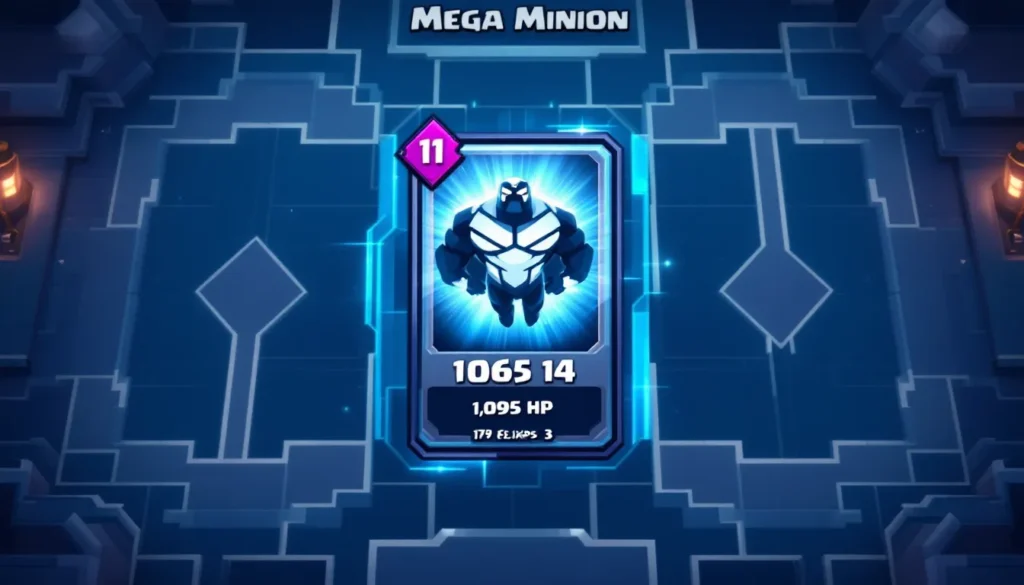
- Mega Minion is a versatile 3-elixir air defense card with 1,095 HP and 179 DPS at max level, making it essential for beatdown, control, and hybrid deck strategies in Clash Royale.
- Spell-based counters like Fireball and Lightning are the most efficient ways to counter Mega Minion, while Inferno Dragon and Electro Dragon are the hardest troop-based matchups.
- Advanced placement strategies—such as off-center positioning, opposite-lane defense, and varied tower placements—separate skilled Mega Minion players from average ones and create pressure opponents must respect.
- Mega Minion excels as a reactive defensive card that cycles quickly, so avoiding early overcommitment and timing its deployment around your elixir rotation and opponent’s spell cooldowns maximizes its value.
- Favorable matchups occur against ground-heavy decks like Prince and Golem beatdown, while difficult matchups require adaptation, such as baiting out Inferno Dragon before committing your Mega Minion to the field.
What Is The Mega Minion And Why It Matters In Clash Royale
Card Stats And Upgrade Mechanics
Mega Minion is a 3-elixir flying troop that deals moderate damage and has solid hit points for its cost. At max level (14), it boasts 1,095 HP and 179 DPS, making it a legitimate threat in both offensive and defensive roles. The card has a 1.4-second hit speed and a 5.5-tile range, which gives it exceptional defensive coverage against both ground and air units.
Upgrade mechanics matter here. Each level increases both HP and damage output, but the jumps aren’t linear. A level 12 Mega Minion (around 4-5K trophy range for most players) deals noticeably less damage than a level 14 version. This matters because you’ll sometimes face fully-leveled Mega Minions at 5K+ trophies, and underleveled versions struggle significantly on offense. When evaluating your own card upgrades, Mega Minion typically deserves priority if you’re running a deck featuring it regularly.
Role In The Current Meta
In 2026’s meta, Mega Minion serves multiple roles depending on deck archetype. It functions as a defensive counter to heavy hitters like Prince, Dark Prince, and Ram Rider, trading favorably or neutrally against most ground-based threats. On offense, it provides steady, reliable DPS that forces opponents to commit resources to stop it, a property that made the Mega Minion Clash Royale: Unleash Its Power for Unstoppable Victory – Powerplaygamers guide such a valuable resource for understanding its multifaceted role.
The card’s flexibility is its greatest strength. Unlike more specialized cards that fill narrow niches, Mega Minion works in control decks, beatdown decks, and hybrid strategies. It’s particularly strong in heavy meta decks because it handles both air threats (Balloon, Flying Machine, Mega Knight counters) and ground offense simultaneously. At mid-ladder and below, Mega Minion often outclasses weaker defenses simply through raw stats. At top ladder, it requires smart placement and support to maximize value.
Best Deck Builds Featuring Mega Minion
Beatdown And Mega Tank Decks
Beatdown decks use slow-moving, high-damage win conditions (like Golem, Mega Knight, or Giant) supported by mid-ladder sweepers and defensive cards. Mega Minion fits perfectly here because it:
- Defends the push while staying alive for a counter-push
- Costs 3 elixir, allowing for quick defensive cycles
- Provides air coverage when the main tank enters the arena
- Adds consistent DPS to support the win condition
A typical Golem beatdown might look like: Golem, Mega Minion, Tornado, E-Giant/Inferno Dragon, Log, Goblins, Musketeer, and Bomber. The Mega Minion handles early air threats while building toward a Golem push. When you place Golem at the back, Mega Minion follows as a support unit, tanking for your Musketeer or Bomber.
Mega Tank decks (featuring units like Mega Knight) similarly rely on Mega Minion for additional damage and defensive value. The card doesn’t compete for elixir space with your main threat, it complements it by ensuring nothing breaks through your defenses.
Cycle And Control Decks
Control decks emphasize surviving early pressure while building a sustainable defensive system. Mega Minion excels here because it cycles quickly (3 elixir) and provides flexible defense. A 2.6-inspired Mega Minion cycle might run: Hog Rider, Mega Minion, Musketeer, Tornado, Log, Ice Spirit, Skeletons, and Cannon.
These decks use Mega Minion as a primary air defender. You place it reactively against threats, and if it survives, it becomes a minor counter-push threat. Cycle decks reward placement precision: dropping Mega Minion slightly forward or at the bridge can catch units off-guard, while placing it behind Crown Towers protects your king tower. Control players often chip away at opponent’s defenses using Hog Rider while their Mega Minion handles the aerial pressure.
The advantage here is flexibility. If your opponent commits ground troops, Mega Minion can pivot to support an offensive play within the same rotation.
Hybrid And Mixed Archetype Decks
Hybrid decks blend multiple strategies, perhaps beatdown elements with control-style card cycling. Mega Minion is genuinely one of the best hybrid cards because it doesn’t lock you into a specific game plan. You might run Mega Knight (melee tank), Mega Minion (air deterrent), Balloon (win condition), Tornado (utility), and so on.
A hybrid beatdown-control deck could feature: Balloon, Mega Minion, Tornado, Inferno Dragon, Bats, Goblins, Dark Prince, and Log. This deck doesn’t commit fully to one large tank: instead, it applies multiple pressure points. Mega Minion defends the sides while Balloon does the heavy lifting. It’s more flexible than pure beatdown but more proactive than control.
Hybrid success depends on understanding when to defend, when to counter-push, and when to take small tower damage to build elixir advantage. Mega Minion is critical to this balance because it provides quick, reliable defense without overcommitting resources.
Top Counters To Mega Minion
Spell-Based Counters
Spells are the most efficient and reliable Mega Minion counters. A well-timed Fireball (4 elixir) is the gold standard: it deals enough damage to outright kill an underleveled Mega Minion and leave an overleveled one extremely low. At equal levels, Fireball leaves the Mega Minion with roughly 200 HP remaining, making follow-up damage crucial. Many pros use Fireball as their primary Mega Minion answer in beatdown decks.
Rocket (6 elixir) completely overkills Mega Minion but has niche value: it cycles cards and clears other troops. Using Rocket solely for Mega Minion is wasteful unless multiple threats exist in one lane.
Lightning (5 elixir) is underrated as a counter. It kills Mega Minion and stuns nearby troops, useful if the Mega Minion shields other units like Musketeer. But, stun doesn’t prevent it from dying, Lightning is a one-and-done counter.
Poison (4 elixir) is less common but works against Mega Minion, especially if it’s already taken chip damage. Poison deals 880 damage over its duration at max level, which isn’t quite enough to outright kill a level 14 Mega Minion (1,095 HP), but it severely weakens it. Poison shines when combined with swarm units, the poison damages while cheaper troops finish the job.
Arrows (3 elixir) seem like an obvious choice, but they’re unreliable because Mega Minion has enough HP to survive Arrows at most levels (Arrows deal roughly 380 damage). Never use Arrows as a dedicated Mega Minion counter unless you’re dealing with a swarm.
Troop-Based Counters
Troop counters are more interactive and support offensive gameplay. Inferno Dragon (4 elixir) is perhaps the single best troop counter. It targets air units specifically, and its ramping damage quickly incinerates Mega Minion. Inferno Dragon trades about even in elixir and leaves with decent HP remaining if the Mega Minion had no support.
Electro Dragon (5 elixir) counters Mega Minion with its stun effect and area damage. The stun leaves Mega Minion helpless for 1.5 seconds, and if you have other air-targeting units, they finish the job. Electro Dragon’s stun makes it valuable against swarm support too.
Flying Machine (4 elixir) is a popular counter at mid-ladder and above. It outranges Mega Minion (6 tiles vs. 5.5 tiles) and deals decent damage. At equal levels, Flying Machine wins the 1v1 trade but requires careful placement to maintain that range advantage, if you drop it too close, Mega Minion closes the gap and dominates.
Musketeer (4 elixir) counters Mega Minion but requires support. She trades favorably in pure 1v1 scenarios due to higher DPS, but Mega Minion’s bulk allows it to reach and pressure her. Pair Musketeer with a defensive building or additional unit for guaranteed value.
Baby Dragon (4 elixir) struggles directly against Mega Minion because of stat differences, but it’s valuable when Mega Minion is protecting other units. Baby Dragon’s splash clears out support troops, forcing Mega Minion to 1v1 your win condition.
The Clash Royale Firecracker: Unleash provides insight into specialized countering tactics, showing how certain troops excel in specific matchups beyond raw statistics.
Budget-Friendly Counter Options
Not every player has max-level Inferno Dragon or Electro Dragon. Budget counters are essential for ladder climbing and tournament play.
Archers (3 elixir) are surprisingly effective. Two Archers can focus-fire Mega Minion and force it to lock onto one, allowing the other to deal free damage. Archers have higher DPS than Mega Minion individually, so if you get both targeting it, you win the trade.
Hunter (4 elixir) is underrated. His shotgun-style damage and substantial HP allow him to pressure Mega Minion while tanking hits. Hunter struggles if Mega Minion has support, but in isolated 1v1s, he’s solid.
Mega Knight (7 elixir) completely counters Mega Minion, he jumps on it and deals massive splash damage. This is overkill in terms of elixir cost, but if you’re already running Mega Knight for other threats, it’s a side benefit.
Barbarians (5 elixir) tank Mega Minion’s hits and deal solid damage collectively. They require good placement (ideally already on the board for defense), but they’re a cheap counter if you anticipate a Mega Minion push.
Bats (2 elixir) are a desperate play: they swarm and die to Mega Minion’s splash, but at 2 elixir, they’re a cycle card first and last-resort defense second. Not recommended as a primary counter.
Advanced Placement And Timing Strategies
Positioning For Maximum Damage
Placement is where Mega Minion separates good players from great ones. Standard placement is typically behind a tower or at the back of your side for defensive purposes. But offensive placement requires subtlety.
When your opponent plays a Golem at the back, many players immediately place Mega Minion at bridge to counter whatever follows. Skilled players instead place Mega Minion slightly off-center in the opposite lane. This forces the opponent to either commit additional defense or take tower damage. The Mega Minion gets full rotation value, it defends a push later and damages the tower now.
Another advanced tactic: when facing a Balloon in the back, resist the urge to place Mega Minion directly under it. Instead, place Mega Minion in front, letting it catch Barbarians, Bats, or other support units first. Once those are gone, Mega Minion locks onto the Balloon and focuses fire. This sequencing prevents support troops from keeping the Balloon alive longer.
Bridge placement is situational. Placing Mega Minion at the bridge behind your side (not the opponent’s) is often superior to bridge placement because it maintains king tower activation optionality. If the opponent’s troops lock onto your Mega Minion first, your king tower can engage. Bridge placement sometimes forces your king tower into the fight prematurely.
Lane selection matters too. If you’re defending a lane where your opponent committed Mega Minion, recognize whether to defend same-lane or opposite-lane. Same-lane defense contains the threat immediately. Opposite-lane defense builds counter-pressure and forces your opponent to address two problems simultaneously. High-level players often choose opposite-lane defense if they have a strong counter-push.
Elixir Management With Mega Minion
Mega Minion’s 3-elixir cost is ideal for elixir cycling, but it demands discipline. In control decks, cycling Mega Minion during the opponent’s counter-push wastes it, you’re spending elixir for defense that won’t defend the actual threat. Timing matters.
The optimal moment to cycle Mega Minion offensively is during the last 10 seconds of a cycle rotation. If your win condition (like Hog Rider) will rotate back soon, deploying Mega Minion during a lull builds up to a stronger combined push. Opponent’s Fireball is already in rotation, it won’t be available when your Hog + Mega Minion combo arrives.
Double-elixir mode changes Mega Minion’s role entirely. In double-elixir, every unit becomes 3 elixir cheaper relative to your generation. Mega Minion becomes an efficient defender you can cycle repeatedly. Some players over-commit to Mega Minion in double-elixir, depleting their deck’s diversity. Instead, treat Mega Minion as part of a coordinated double-elixir assault: Mega Minion + Balloon, for instance, becomes far more threatening in double-elixir than single-elixir.
Elixir disadvantage is Mega Minion’s weakness. If you’re down 4-5 elixir, placing Mega Minion defensively is correct, but it should be your last resort, not your first reaction. Defend with cheaper units (Bats, Skeletons, Ice Spirit) first, saving Mega Minion for when your opponent commits major threats.
Common Mistakes Players Make With Mega Minion
New and intermediate players consistently misuse Mega Minion in ways that cost them matches. Recognizing these errors dramatically improves your play.
Overcommitting early: Placing Mega Minion at minute 1 when you don’t know your opponent’s deck is wasteful. Build your hand first. Wait for them to spend elixir, then react. Mega Minion’s flexibility means it works better as a reactive card than a proactive opener.
Poor lane selection: Placing Mega Minion same-lane every time is predictable and inefficient. If your opponent pushes left, sometimes defending right (to build counter-pressure) is stronger. The best players alternate lanes and keep opponents guessing.
Ignoring support troops: New players place Mega Minion and expect it to solo-carry the defense. Mega Minion is a multiplier, not a solution. It works best alongside other units. Place it with Bats, Skeletons, or Archers for overwhelming force. A lone Mega Minion gets surrounded and kited by any decent push.
Wasting it on small threats: Dropping Mega Minion to handle a single Musketeer or Knight is inefficient. Those cost 4-5 elixir: Mega Minion costs 3. Save Mega Minion for threats that demand its specific value, flying units or heavy troops it can tank for.
Greedy Fireball/Rocket usage: Opponents with Fireball or Rocket in their deck are likely saving it specifically for your Mega Minion + support combination. Avoid stacking Mega Minion with other air units (like Balloon) in the same lane. Spread your threats across lanes to force inefficient usage of their spells.
Static placement: Always placing Mega Minion in the same spot becomes exploitable. Vary your placements. Sometimes defend from different towers, sometimes place it at bridge, sometimes at the back. This keeps opponents off-balance.
Ignoring elixir count: Placing Mega Minion when you’re low on elixir (below 5) often means you can’t cycle or defend subsequent threats. Know your deck’s elixir curve. Mega Minion’s 3-elixir cost is nice, but it’s not free.
Underestimating the matchup: Some matchups genuinely disfavor Mega Minion. If your opponent runs Inferno Dragon or Electro Dragon, your Mega Minion is a liability. Recognize bad matchups and don’t force the card into unfavorable trades.
Mega Minion Matchups: Win Conditions And Loss Scenarios
Favorable Matchups And How To Exploit Them
Mega Minion shines against decks with weak air defense or heavy ground-based offense. Decks running Prince, Dark Prince, or Ram Rider without proper air counters fear Mega Minion because it’s both a soft counter to these units and a perpetual aerial threat they can’t ignore.
Against Balloon decks, Mega Minion is perfect when paired with fast-cycling support. While Mega Minion alone doesn’t stop a Balloon, it deals consistent damage while your other units apply pressure. The matchup favors you because Balloon decks are often greedily built and don’t handle reactive defenses well.
Vs. Hog Rider decks, Mega Minion is a solid inclusion. It cycles quickly, defends other threats in the Hog player’s deck (like Musketeer or Baby Dragon), and supports your win condition. The matchup isn’t a hard counter, but Mega Minion’s flexibility keeps you ahead.
When facing Golem beatdown, Mega Minion excels if you also run an Inferno Dragon or similar building-focused defense. Mega Minion handles the support troops (Musketeer, Baby Dragon) while your other cards manage the Golem itself. This is one of Mega Minion’s best matchups because it answers multiple threats simultaneously.
To exploit favorable matchups, be aggressive with your Mega Minion placements. If your opponent lacks a reliable counter, cycling Mega Minion frequently and even placing it slightly forward creates pressure they can’t ignore. They’ll either commit premium elixir to stop it or take tower damage.
Research indicates that understanding Valkyrie Clash Royale: Unleash provides similar strategic insights into positioning alternatives when Mega Minion doesn’t fit your deck’s specific counters.
Difficult Matchups And Adaptation Tips
Inferno Dragon decks are Mega Minion’s hardest matchup. Inferno Dragon outright crushes Mega Minion, and you can’t avoid it forever. Adaptation: bait out Inferno Dragon with cheaper air units (Bats, Goblins) before committing Mega Minion. Or pivot entirely: if Inferno Dragon is killing your Mega Minions, stop using it and rely on ground-based threats.
Electro Dragon decks are similarly brutal because of the stun. Electro Dragon’s stun animation gives opponents free elixir while your Mega Minion is helpless. Adaptation: use Mega Minion defensively only when you’re absolutely certain Electro Dragon isn’t in hand. Preserve your Mega Minion for non-stun threats.
Inferno Tower hard-counters Mega Minion’s value. Unlike troop counters, you can’t trade favorably against a building. Adaptation: if your opponent has Inferno Tower and you’re running Mega Minion, accept that your win condition must come from another card. Don’t force Mega Minion into the tower repeatedly.
Vs. Pekka decks, Mega Minion is a soft answer, it survives and deals damage but eventually loses. P.E.K.K.A’s speed and burst damage overwhelm Mega Minion. Adaptation: place Mega Minion to distract P.E.K.K.A while your other units focus damage. Or place Mega Minion from range, forcing P.E.K.K.A to chase it, wasting time and elixir. Understanding Clash Royale P.E.K.K.A: Unleash reveals how this matchup often favors P.E.K.K.A unless you have specific counters.
Flying Machine decks don’t hard-counter Mega Minion but outrange it, creating awkward trades. Adaptation: place Mega Minion behind protective units so it survives Flying Machine’s initial damage burst. Or cycle aggressively, cycling past Flying Machine in your hand until you’re confident it’s in their graveyard.
Against Mirror decks (where opponents mirror your cards), Mega Minion becomes high-risk because they can immediately mirror it with equal stats. Adaptation: cycle other cards into rotation first. Force them to spend their Mirror on less valuable targets. Save Mega Minion until late-game when mirror is less impactful.
Research from Game8 emphasizes that meta shifts often change which matchups are favorable, so periodically revisiting matchup stats is essential for competitive play.
Conclusion
Mega Minion’s staying power in Clash Royale since its release speaks volumes about its design. It’s neither overpowered nor obsolete, it’s simply a well-balanced, flexible card that rewards skilled play and punishes poor decision-making.
Mastering Mega Minion means understanding its multiple roles: defender, support unit, win condition facilitator, and elixir cycle. It means recognizing favorable matchups and exploiting them ruthlessly while adapting your strategy against decks built specifically to counter it. Placement precision, timing awareness, and elixir discipline separate good Mega Minion players from great ones.
Whether you’re building a beatdown deck, a control cycle, or a hybrid strategy, Mega Minion has earned its place in your arsenal. The card’s versatility means that improving with it translates directly to climbing trophies and performing better in tournaments. Invest the time to understand its matchups, experiment with different placements, and you’ll find that Mega Minion becomes one of your most reliable tools for securing victories.