
Table of Contents
ToggleThe Dragon Ball crossover landed in Clash Royale like a ki blast, and Goku arrived as one of the most talked-about cards in the meta. Whether you’re a casual player testing new decks or climbing the ladder competitively, you’ve probably wondered if the legendary Saiyan belongs in your lineup. This guide breaks down exactly what Goku brings to the table, his stats, abilities, ideal deck builds, and whether he’s worth leveling up for your trophy push.
Key Takeaways
- Goku in Clash Royale is a 6-elixir melee champion with 2,856 HP and a game-changing Super Saiyan Transformation that triggers below 50% health, granting +35% movement speed and +25% damage for 8 seconds.
- The legendary card is grindable for free-to-play players through standard acquisition methods (legendary chests, shops, and clan requests) and requires 80 copies to reach tournament standard Level 13.
- Goku excels in three primary deck archetypes: aggressive beatdown decks for constant pressure, control decks paired with Inferno Dragon for elixir ramping, and simplified mid-ladder strategies for players climbing toward 5,000+ trophies.
- His strongest matchups are against swarms, air-unit defenses, and Hog Rider, while hard counters include Inferno Dragon, Electro Giant, and pure Graveyard decks that overwhelm his tanking ability.
- Smart Goku placement requires stacking behind support units, avoiding the center lane to limit opponent response options, and managing the 8-second transformation window strategically rather than spamming him without elixir advantage.
- At current balance post-nerf, Goku maintains a solid 51-53% win rate and is genuinely worth maxing for beatdown enthusiasts and mid-ladder grinders, though he’s not essential for ultra-competitive ladder or tournament play.
What Is the Goku Clash Royale Crossover?
In late 2024, Supercell partnered with Bandai Namco to bring Dragon Ball into Clash Royale’s card collection. Goku became the flagship champion of this collaboration, arriving as a legendary card that fundamentally shifts how players approach mid-ladder and ladder meta. Unlike generic crossovers that feel tacked on, Goku’s mechanics actually integrate into Clash Royale’s core gameplay without feeling gimmicky.
The crossover wasn’t just a cosmetic skin. Goku functions as a heavy hitter with unique scaling properties tied to his signature transformation ability. He bridges the gap between glass-cannon damage dealers and tanky win conditions, making him a flex pick in multiple deck archetypes. Platform availability spans iOS, Android, and PC, so whether you’re grinding on your phone during lunch or at a desktop tournament, Goku’s available across all platforms.
Supercell balanced the release carefully. At launch, Goku came in at the top of win-rate statistics, but subsequent patches toned down his raw damage to prevent complete meta dominance. This is typical Supercell behavior: test cards strong, then adjust based on ladder feedback.
How to Unlock and Obtain Goku
Unlike limited-time cosmetics, Goku is a permanent legendary card available through standard acquisition methods. You can get him via:
- Legendary chests (standard 2% drop rate per legendary)
- The legendary shop (craftable with Legendary Wildcard tokens)
- Special event rewards (Supercell occasionally features him in limited-time events)
- Gold/Gem purchases (faster unlock if you’re willing to spend, but not required)
Once unlocked, you can request Goku in your clan as soon as you join a clan with sufficient level requirements. Most mid-ladder clans allow Goku requests immediately since his initial release has long passed the novelty phase.
Leveling Goku to tournament standard (Lvl 13) requires the same standard card economics as any other legendary: 20 copies for Lvl 11, 40 total for Lvl 12, and 80 total for Lvl 13. The investment mirrors other meta legendaries like Electro Giant or Lumberjack. If you’re a free-to-play player, you’re looking at 4-6 months of dedicated requests and shop purchases to max him out. The grind is real, but the payoff justifies it if he fits your preferred playstyle.
Goku’s Stats, Abilities, and Mechanics
Attack Range and Damage Output
Goku operates as a melee champion with a 2-tile attack range and 1.5-second attack speed. At Lvl 13, his base damage per hit sits at 185 DPS (damage per second), scaling from approximately 278 damage per swing.
His damage output makes him feel more like a mini-tank than a pure glass cannon. He’s not the raw DPS monster that Inferno Dragon or Mega Minion delivers, but he trades some peak damage for survivability and consistency. The 2-tile range means he needs to be placed closer to threats than ranged cards, but this actually encourages more tactical placement, you’re not just plonking him at the bridge and watching him work.
Hitpoints clock in at around 2,856 HP at Lvl 13, making him tankier than a Lumberjack (2,200 HP) but squishier than a Mega Knight (3,956 HP). This health pool forces you to protect him actively rather than treating him as unkillable.
Special Ability: Super Saiyan Transformation
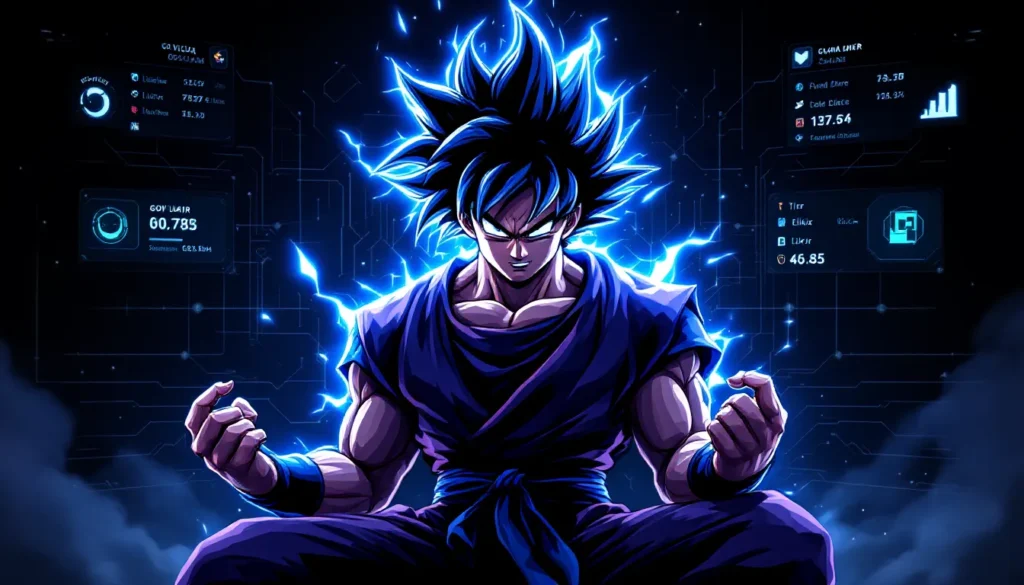
Goku’s signature mechanic is his Super Saiyan Transformation, which triggers when his health drops below 50%. Upon activation, Goku gains:
- +35% movement speed increase for 8 seconds
- +25% damage boost lasting the same 8-second duration
- Visual transformation (blue aura and changed appearance)
- A one-time audio cue that signals the transformation to both players
The transformation can only trigger once per deployment. Once those 8 seconds expire, Goku reverts to normal stats regardless of his remaining health. This is a balance safeguard, without the cooldown, Goku could chain transformations endlessly if healed repeatedly.
Competitive players exploit this window aggressively. The speed boost lets him chase fleeing units and the damage boost threatens remaining tower health. But, smart opponents play around the transformation window. If they know it’s active, they can place defensive buildings or stall with cheaper cycle cards until the buff expires, then re-engage. The transformation is powerful but predictable once you’re familiar with the timing.
Elixir Cost and Tournament Viability
Goku costs 6 elixir to deploy, placing him in the mid-expensive range. For reference:
- Mega Knight (7 elixir) is the direct comparison
- Lumberjack (4 elixir) is significantly cheaper
- Skeleton King (6 elixir) costs identical elixir but fills a different role
Six elixir is the sweet spot for win conditions in modern Clash Royale. It’s expensive enough that committing Goku requires meaningful elixir advantage, but cheap enough that you can cycle him back within 2-3 rotations after a successful push. In tournament standard matches (5 minutes with 1x elixir), this means you’re deploying Goku roughly every 15-20 seconds once matches reach double elixir.
Tournament viability comes down to the meta snapshot at any given time. At launch, Goku was over-tuned, sitting at 58%+ win rates in mid-ladder. Recent patches dialed him back to roughly 51-53% win rates, which is solidly meta but not auto-include anymore. Decks running Goku perform well against air-centric defenses and swarm matchups, but struggle if you face hard counters like Inferno Dragon paired with defensive cycling.
Best Deck Builds Featuring Goku
Aggro Beatdown Deck
Goku shines brightest in aggressive pressure decks that cycle him repeatedly and force opponents into reactive defense. A classic Goku beatdown looks like:
- Goku (6 elixir) – Win condition
- Mirror (1 elixir) – Cycle and mirror important cards
- Skeletons (1 elixir) – Cheap cycle, swarm support
- Skeleton King (6 elixir) – Secondary tank/support
- Fireball (4 elixir) – Spell support for cleanup
- Zap (2 elixir) – Cycle and reset stun-immune units
- Bomber (3 elixir) – Splash damage support
- Barbarian Barrel (3 elixir) – Swarm control and spell damage
This deck throttles opponents through constant pressure. Mirror lets you spam Goku faster, while cheap cards cycle back to your win conditions. Against control decks, you’re looking for elixir advantage and chipping tower health steadily. Against swarms, Bomber and Barbarian Barrel clear clutter before Goku connects.
Win condition: Flood the lane with Goku and support units while cycling faster than opponents can defend. Post-transformation, push harder with your residual elixir advantage.
Control and Cycle Deck
Goku also fits control-oriented deck lists that prioritize defense and punish overcommits. A pure control variation:
- Goku (6 elixir) – Win condition
- Inferno Dragon (4 elixir) – Tank killer
- Tornado (1 elixir) – Pull and cycle
- Ice Spirit (1 elixir) – Cheap defense and cycle
- Goblin Cage (4 elixir) – Spawner defense
- Log (2 elixir) – Swarm control
- Firecracker (3 elixir) – Ground defense
- Elixir Collector (5 elixir) – Ramp into Goku cycles
With Elixir Collector, you’re engineering late-game double elixir scenarios where cycling Goku becomes overwhelming. Early rotation revolves around Inferno Dragon and cheap cards to defend while collectors tick. Once you’re ahead on elixir, Goku becomes a tower-chipping machine.
Win condition: Establish a defensive perimeter, generate elixir advantage via collectors, then lock your opponent down with Inferno Dragon while Goku chips from range or after transformation. The control archetype is grind-heavy but excels against other aggressive decks since you’re forcing their overcommits into Inferno Dragon.
Mid-Ladder Friendly Strategy
For players grinding towards 5,000+ trophies, Goku thrives in simplified, plug-and-play decks that don’t require perfect micro. A beginner-friendly variant:
- Goku (6 elixir) – Carry win condition
- Lumberjack (4 elixir) – Speed support
- Goblin Giant (7 elixir) – Tank option
- Musketeer (4 elixir) – Defensive ranged unit
- Fireball (4 elixir) – Offense and defense
- Arrows (3 elixir) – Swarm control
- Barbarians (5 elixir) – Tank killer
- Ice Wizard (3 elixir) – Control and support
This deck’s advantage is simplicity. You’re not relying on frame-perfect timing or complex interactions. Goblin Giant tanks, Lumberjack speeds up Goku, and you control swarms with Arrows. It’s less refined than the previous two archetypes but trades complexity for consistency, perfect if you’re learning Goku’s play patterns. The win rate drops at top ladder since opponents punish greedy plays, but for grinding mid-ladder, it’s straightforward and effective.
One note: While Clash Royale Double Evolution Deck guides discuss evolved units that permanently enhance your cards, Goku doesn’t currently evolve through standard mechanics, his Super Saiyan transformation is the only stat-shifting mechanic he possesses.
Goku vs. Meta Matchups: What You Need to Know
Goku’s matchup spread is reasonably balanced but not universally favorable. Here’s how he stacks against current meta threats:
Favorable Matchups:
- Against Swarm Decks: Goku’s splash potential and transformation speed lets him plow through token generators. Decks running multiple spawners struggle if Goku connects consistently.
- Against Air Units: His melee nature doesn’t counter air directly, but supporting units (Musketeer, Firecracker) handle flying threats while Goku clears ground presence.
- Against Hog Rider: If you place Goku defensively, he absorbs Hog damage and kills the threat before major tower damage. Reverse trading is your friend here.
Unfavorable Matchups:
- Against Inferno Dragon: The Inferno Dragon shreds Goku’s health faster than he deals damage. This is perhaps his worst matchup, you need spell support (Zap/Log) to interrupt the beam.
- Against Electro Giant: Similar issue. The Electro Giant reflects Goku’s damage, negating your DPS investment. You need building support or ranged units to soften the EG before Goku engages.
- Against Graveyard: Pure Graveyard decks bury Goku under skeletons unless you’ve cycled your defensive cards correctly. The spell hits your tower while Goku gets swarmed.
Neutral Matchups:
- Against Mega Knight: Both are 6-7 elixir tanks with area damage. Whoever has better support wins the trade.
- Against Lava Hound: If you defend the Hound with ranged units and let Goku mop up pups, you trade favorably. If you let the Hound reach your tower, you’re in trouble.
The key takeaway: Goku’s versatility is his strength, not any single dominant matchup. He’s balanced against meta threats, meaning your deck tech and support cards matter more than Goku’s raw stats. Pairing him with Inferno Dragon defense or spell support changes matchups dramatically. Experienced players adjust based on opponent’s opening card, which separates casual ladder grinders from competitive-level play.
Tips and Strategies for Playing Goku Effectively
Positioning and Placement
Goku’s 2-tile range requires more thought than ranged units. Poor placement leaves him whiffing attacks against defensive buildings or getting separated from his own support. Effective positioning follows these principles:
- Stack behind support. Deploy Goku after Lumberjack or a tank depletes their defensive resources. He needs clear sightlines to your target.
- Avoid the center lane. Center lane deploys give opponents maximum response options. Side lane pushes (left or right) force them to commit defenders to a specific lane, reducing flexibility.
- Respect tornado pulls. Against Tornado users, play Goku slightly offset from the tower. A well-timed Tornado pulls Goku away from your support units, resetting the engagement.
- Use buildings as cover. If your opponent plays a building defensively, position Goku to one side so the building doesn’t block his attacks on your intended target.
Think of Goku placement like artillery positioning, you’re not just dropping him anywhere, you’re setting up a kill zone where his support units protect him while he deals damage.
Timing and Elixir Management
Elixir efficiency determines whether you’re leveraging Goku or wasting him. A few critical timing concepts:
- Build elixir advantage before Goku. In double elixir, don’t spam Goku randomly. If you’re at 8 elixir and your opponent has 4, hold that Goku and defend their push first. Defend efficiently (6 elixir), then deploy Goku with the 8-elixir advantage now creating a 10-6 elixir gap. This is positive elixir trading and it wins matches.
- Recognize Goku cycling windows. At tournament standard (1x elixir), Goku appears in your hand roughly every 20 seconds depending on deck speed. Knowing this window helps you anticipate when you can deploy him again, allowing you to calculate final tower damage.
- Transform timing matters. Once Goku drops below 50% HP, the transformation is automatic. But, you control when he takes damage by what you defend against. If you know a Fireball is incoming, let Goku absorb it before transformation so the damage boost is active when you push.
Resources discussing how to improve your Clash Royale gameplay cover many of these advanced concepts, though the specific Goku timings require practice against live opponents.
Common Mistakes to Avoid
- Overcommitting in single elixir. Deploying Goku with no supporting cards leaves him alone against concentrated defense. You’ll lose the trade. Always assume opponents can defend, and build your push with supporting units first.
- Ignoring the transformation cooldown. New players assume Goku transforms multiple times per deployment. He doesn’t. Once those 8 seconds end, he’s back to baseline stats. Play around this window: don’t expect continuous buffs.
- Mirror cycling recklessly. Mirror is tempting for spamming Goku, but mirroring expensive cards wastes elixir if your opponent defends efficiently. Mirror works best on cheap cards (Skeleton, Zap) for true cycling. Don’t Mirror Goku unless you’re desperate and ahead.
- Forgetting to support Goku against hard counters. Against Inferno Dragon, Goku alone loses hard. You need Zap or Log support. Same with Electro Giant. Build your push with the counter in mind, not Goku alone.
Is Goku Worth the Investment?
The real question: Should you invest the 80+ legendary cards and months of grinding to max Goku?
The answer depends on your playstyle and trophy range. If you enjoy aggressive beatdown decks or mid-ladder grinding, Goku is absolutely worth it. His versatility means he fits multiple archetypes, and his flashy transformation keeps matches exciting. At current balance (post-nerf), his 51-53% win rate is solid without being overpowered, meaning skill matters more than card level.
For ultra-competitive ladder (6,500+ trophies) and tournament play, the picture’s more nuanced. Goku functions well but isn’t essential. Top ladder players might run him in specific metas but often gravitate toward Mega Knight or Lumberjack in similar elixir slots since those cards have longer track records of proven consistency. Tournament results show Goku appearing occasionally but not dominating final tables, he’s viable, not auto-win.
Free-to-play players should consider patience. Leveling Goku competes with other meta cards. If you’re just starting out, established legendaries like Electro Giant or Inferno Dragon might serve you better in the long run since they’re easier to learn and have simpler win conditions. Goku’s nuance pays off once you understand him, but that learning curve costs months of ladder grind.
Meanwhile, players investigating whether Clash Royale is truly pay-to-win will find that Goku actually refutes some of those concerns, he’s powerful but entirely grindable without spending money. His balanced stats mean a lower-level Goku still functions: he’s just slightly less tanky and deals marginally less damage.
The investment tier ranking:
- Tier S (Must Max): If Goku’s your favorite card or you main beatdown decks
- Tier A (Worthwhile): If you play mid-ladder casually and want a strong carry option
- Tier B (Optional): If you’re competitive and flexible with multiple decks
- Tier C (Skip): If you’re brand-new and need fundamentals first
Start with one solid Goku build, test it across 20+ matches, then decide if the playstyle clicks. That 20-match sample beats speculation.
Conclusion
Goku in Clash Royale delivers exactly what the crossover promised: a mechanically interesting card that feels true to the character while maintaining game balance. His Super Saiyan transformation isn’t just flavor, it’s a real tactical element that rewards skilled placement and elixir management. Whether you’re climbing mid-ladder for the first time or refining tournament strategies, Goku offers a viable path forward.
His current balance state (post-nerfs) positions him as a strong choice without dominating the meta entirely. That’s healthy design. You’ll see him regularly at 5,000+ trophies, but he’s not the only card worth playing. The true value comes from understanding when and how to deploy him, which is what separates legend-tier plays from mid-ladder mashing.
Start small. Request Goku from your clan. Test one of the three deck builds listed above. If the aggression and transformation mechanics appeal to you, commit to leveling him up. If he doesn’t click, no harm in exploring other legendaries. Clash Royale’s depth comes from personal preference intersecting with meta knowledge. Goku empowers both, making him a genuinely worthwhile addition to your cardography.